Best Oversized Flatbed Loads: Beginner's Permit Freight Guide 2026
Oversized Flatbed Loads: A Beginner's Guide to Hauling Permitted Freight
Oversized freight pays well because most carriers are not equipped or prepared to haul it correctly. If you are a flatbed operator looking to grow into permitted freight, understanding the basics of size limits, permits, and safety requirements is the first step before accepting your first oversize load.
Table of Contents
- What Makes a Load Oversized
- Understanding Basic Permit Requirements
- Common Categories of Oversize Freight
- Safety Equipment and Route Planning Basics
- Why Oversized Freight Pays More
- Getting Started With Your First Oversize Load
- Common Mistakes New Oversize Carriers Should Avoid
- How Dispatch Support Helps
- FAQ
What Makes a Load Oversized
A load becomes oversized when it exceeds standard legal dimensions for width, height, length, or weight on public roads. These limits vary by state, but general federal guidance sets a baseline that most states build additional rules around.
Once a load crosses these thresholds, it requires a special permit to legally travel on public highways, along with specific safety equipment and, in some cases, escort vehicles.
Understanding Basic Permit Requirements
Permits for oversized freight are typically issued by the state department of transportation for each state the load will travel through. This means a single oversize trip might require multiple permits if it crosses state lines.
Permits usually specify approved travel times, restricted routes, and required safety equipment like flags, lights, or signage. Ignoring these details can lead to fines or being pulled off the road entirely until the correct permit is secured.
Because permit rules differ from state to state, many new flatbed operators work with a permit service or dispatch partner familiar with the process to avoid costly mistakes.
Did You Know?
A single oversize trip crossing multiple states may require a separate permit for each state, and processing times can vary from same-day to several days depending on the route and load size.
Common Categories of Oversize Freight
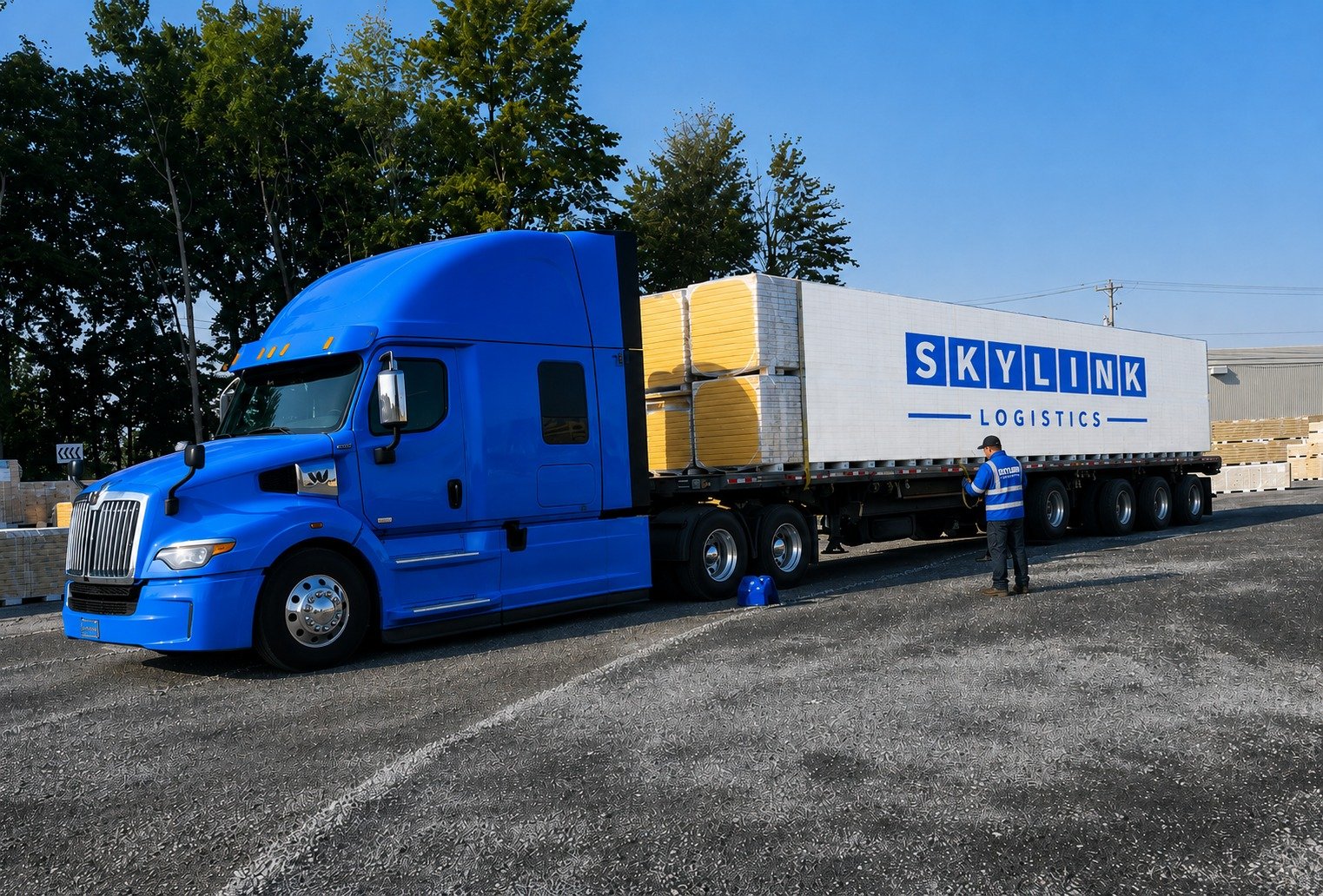
Construction and industrial equipment often falls into the oversize category due to width and height. Prefabricated building sections, like modular homes or large tanks, frequently require permits due to their size. Certain agricultural equipment can also exceed standard dimensions, especially wider models designed for large-scale farming operations.
Understanding which types of freight commonly require permits helps you recognize opportunities and prepare properly before accepting a load.
Safety Equipment and Route Planning Basics
Oversize loads typically require visible markings, such as oversize load signage, flags, and additional lighting to alert other drivers. Depending on the size and state requirements, pilot or escort vehicles may also be required to help guide the load safely through traffic and around obstacles like low bridges or narrow lanes.
Route planning becomes far more important with oversize freight. A route that works fine for standard freight may include bridges, tunnels, or turns that cannot safely accommodate an oversize load. Checking clearance heights, weight limits on bridges, and any construction zones ahead of time helps avoid dangerous or illegal situations on the road.
Pro Tip
Always verify bridge clearances and weight limits before committing to a route for an oversize load. A single low bridge can turn a profitable trip into a costly and dangerous situation.
Why Oversized Freight Pays More
Oversize loads require specialized equipment, careful planning, and often additional permits and escort costs. Because fewer carriers are willing or able to handle this complexity, shippers typically pay a premium to secure reliable, experienced haulers.
For flatbed carriers willing to learn the process, oversize freight can become a steady source of higher-paying loads compared to standard flatbed freight.
Getting Started With Your First Oversize Load
- Start small. A load that is only slightly over standard dimensions is a good way to learn permit requirements without taking on the added complexity of escort vehicles or extreme size restrictions.
- Work with an experienced dispatch partner or permit service during your first several oversize loads. Learning the permit process alongside someone familiar with it reduces the risk of costly mistakes.
- Keep detailed records of every permit, route, and requirement for each state you operate in, since this knowledge becomes more valuable and more efficient to use the more oversize freight you haul.
Common Mistakes New Oversize Carriers Should Avoid
- Assuming one state's permit rules apply everywhere is a frequent and costly mistake, since requirements can differ significantly between states.
- Skipping route verification is another serious error, since a single low bridge or narrow turn can turn into a dangerous or illegal situation without proper planning.
- Underestimating the time needed to secure permits also causes problems. Some permits take longer to process than expected, so building in extra lead time protects your schedule and your relationship with the shipper.
How Dispatch Support Helps Flatbed Carriers Move Into Oversize Freight
Learning the oversize permit process while also running a business can feel overwhelming. A dispatch partner familiar with oversize freight can help identify appropriate loads, coordinate permit timing, and support route planning as you build experience.
Skylink Logistics helps flatbed carriers find suitable freight and plan routes carefully, supporting carriers as they grow into higher-paying, permitted freight opportunities.
For more on flatbed-specific dispatch, see our guide on flatbed dispatch service and accessorial charges.
FAQ
Ready to Explore Oversized Flatbed Opportunities?
Skylink Logistics helps flatbed carriers find suitable freight, plan routes carefully, and grow into higher-paying permitted freight with no forced dispatch.
Start Carrier Setup | Contact Skylink Logistics
Call: (346) 214-5292 | Email: dispatch@skylinkusa.com