Best Owner Operator Break Even Cost Per Mile: Calculate Trucking Profitability 2026
Owner Operator Profitability: How to Calculate Your True Break Even Cost Per Mile
Many owner operators know roughly how much they earn per mile, but far fewer know exactly how much it costs them to run that same mile. Without that number, it is nearly impossible to know whether a load is actually profitable or quietly losing you money. Calculating your true break even cost per mile is one of the most important steps toward real profitability.
Table of Contents
Why Break Even Cost Per Mile Matters So Much
Rate per mile alone does not tell you whether a load is worth taking. A load paying two dollars per mile might be a great deal for one carrier and a losing proposition for another, depending entirely on their operating costs.
Break even cost per mile is the number below which you are actually losing money on a load, even if it feels like you are earning something because cash is coming in. Knowing this number transforms load selection from guesswork into a clear business decision.
Did You Know?
Many owner operators discover their true break even cost per mile is 20-30% higher than they initially estimated once all costs are properly accounted for.
Fixed Costs You Need to Include
Fixed costs are expenses that stay roughly the same whether your truck is running constantly or sitting idle. This includes truck payments, insurance premiums, permits, and licensing fees.
Add up your total monthly fixed costs, then divide by your average monthly miles to find your fixed cost per mile. This number does not change much from load to load, but it is essential to include in your overall calculation.
Variable Costs That Change With Every Mile
Variable costs shift depending on how much you actually drive. Fuel is usually the largest variable cost, followed by maintenance, tires, and other wear related expenses.
Track these costs closely over several months to get an accurate average, since fuel prices and maintenance needs can fluctuate. Divide your total variable costs by total miles driven to find your variable cost per mile.
Combining Fixed and Variable Costs
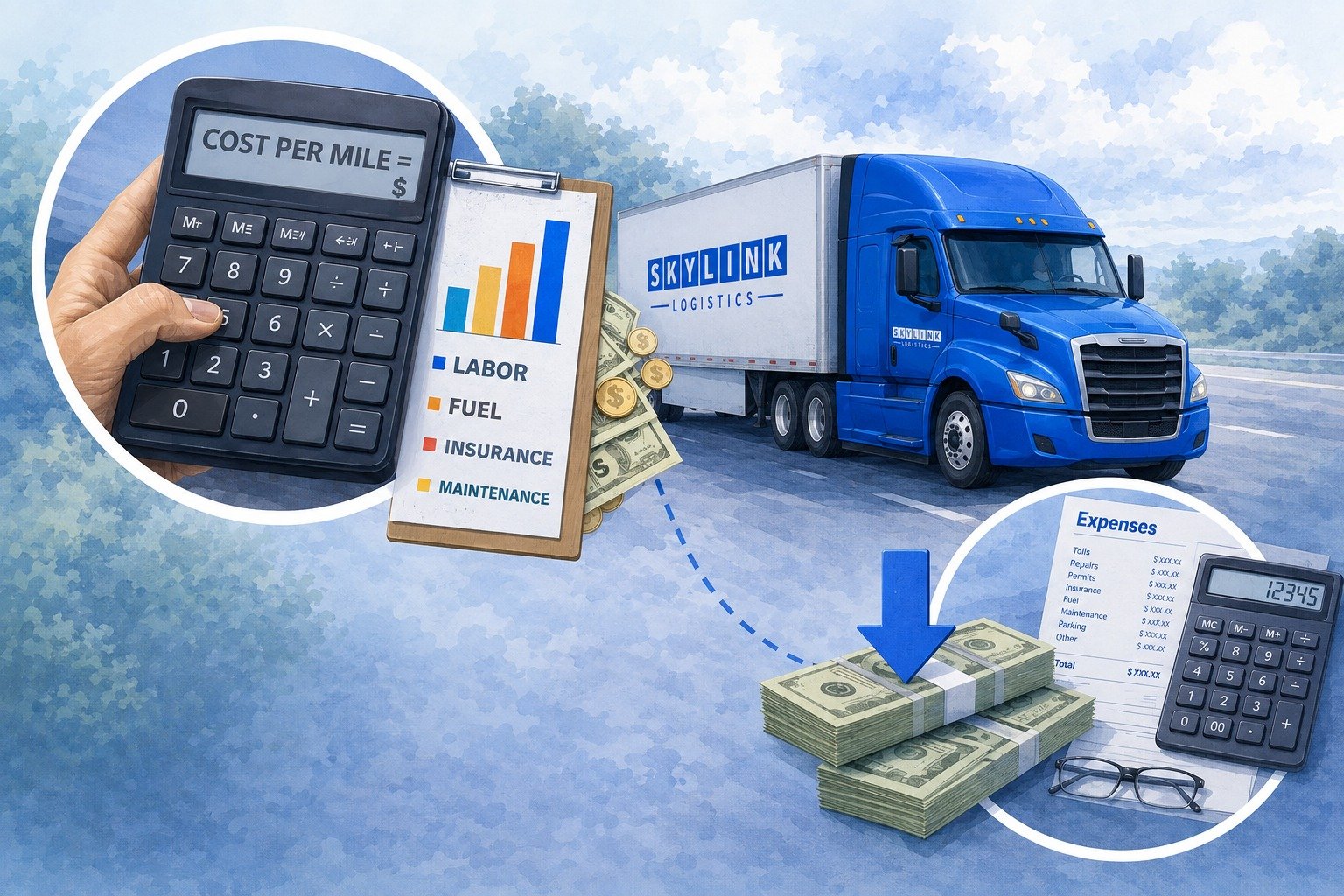
Once you have both numbers, add your fixed cost per mile and variable cost per mile together. This combined number represents your true break even cost per mile, the point below which any load actually costs you money to run rather than earning you profit.
Many owner operators are surprised to discover their break even point is higher than they assumed, especially once often overlooked costs like maintenance reserves and downtime are properly accounted for.
Pro Tip
A simple formula: Fixed Cost Per Mile + Variable Cost Per Mile = True Break Even Cost Per Mile. Track both separately for the most accurate picture.
Often Overlooked Costs That Skew the Calculation
- Maintenance reserves are frequently underestimated. Instead of only counting recent repair bills, it helps to set aside a consistent amount per mile specifically for future maintenance, since major repairs can appear suddenly and unpredictably.
- Downtime also deserves consideration. Time spent waiting for loads, dealing with breakdowns, or handling paperwork does not generate mileage, but fixed costs like insurance and truck payments continue regardless. Factoring in realistic downtime helps create a more accurate picture of true operating costs.
Using Your Break Even Number to Evaluate Loads
Once you know your break even cost per mile, evaluating a load becomes much clearer. Any rate offered below that number, once deadhead miles are factored in, represents a loss rather than a profit, even if it feels productive to keep the truck moving.
This does not mean every load below your ideal target rate should be rejected outright, since some strategic loads might position you for a stronger reload. It does mean you should make that decision consciously, knowing the real financial impact, rather than accepting low paying freight without realizing the true cost.
Reviewing and Updating Your Numbers Regularly
Operating costs change over time due to fuel price shifts, insurance renewals, and aging equipment that may require more maintenance. Reviewing your break even calculation every few months keeps your numbers accurate and ensures your load selection reflects your current real costs, not outdated assumptions from months or years earlier.
How Dispatch Support Helps Owner Operators Protect Profitability
Understanding your break even cost per mile is only useful if it actually shapes which loads you accept. A dispatch partner who understands your target rates can help filter out loads that fall below your true break even point, protecting your profitability week after week.
Skylink Logistics works with owner operators to negotiate rates and plan routes with real profitability in mind, not just keeping the truck moving for its own sake.
For more on trucking financial management, see our guide on truck bookkeeping for owner operators.
FAQ
Ready to Protect Your Profitability With Every Load?
Skylink Logistics helps owner operators negotiate rates that cover true operating costs and plan routes with real profitability in mind, with no forced dispatch.
Start Carrier Setup | Contact Skylink Logistics
Call: (346) 214-5292 | Email: dispatch@skylinkusa.com