Factoring vs Quick Pay: The Best Cash Flow Strategies for New Freight Carriers
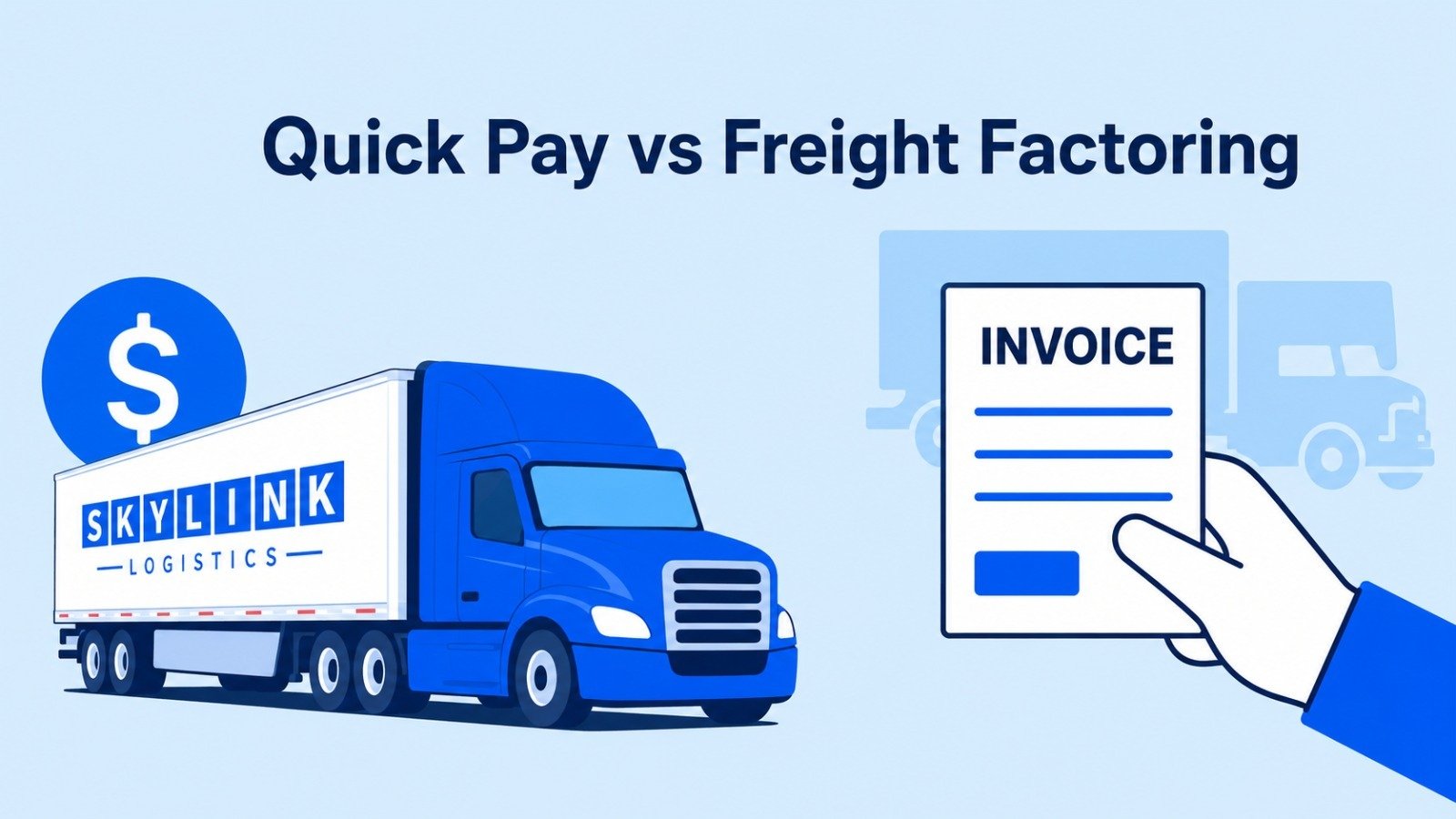
Cash flow problems shut down more new trucking businesses than almost anything else. Fuel, maintenance, and insurance do not wait for a broker to pay an invoice thirty or sixty days after delivery. Factoring and quick pay both solve this problem, but they work differently, and choosing the right one can make a real difference for a new carrier.
Table of Contents
Why Cash Flow Is Such a Common Struggle for New Carriers
Standard broker payment terms often run thirty to sixty days after delivery. For an established carrier with strong cash reserves, this delay is manageable. For a new carrier still building reserves, it can create serious strain, especially when fuel and maintenance costs need to be covered immediately.
This gap between delivering a load and actually receiving payment is exactly what factoring and quick pay are designed to close.
Did You Know?
Standard broker payment terms often run 30 to 60 days after delivery. Factoring and quick pay both solve this cash flow gap, but they work in different ways.
What Factoring Actually Does
Factoring involves selling your invoice to a factoring company in exchange for immediate payment, usually within a day or two, minus a fee. The factoring company then collects payment directly from the broker or shipper according to the original payment terms.
This arrangement gives carriers immediate access to cash without waiting out the full broker payment cycle, which can be essential for covering ongoing operating costs.
What Quick Pay Offers Instead
Quick pay is a service often offered directly by brokers, allowing carriers to receive payment faster than standard terms in exchange for a small fee, typically taken as a percentage of the invoice. Unlike factoring, quick pay does not involve selling the invoice to a separate company. It is simply an accelerated payment option offered directly through the broker.
Comparing Fees Between Factoring and Quick Pay
Factoring fees vary based on the factoring company, your business history, and whether you choose recourse or non recourse factoring. Rates typically range based on invoice volume and risk assessment.
Quick pay fees are often set directly by the broker and tend to be a smaller percentage, but they only apply to that specific broker's loads, meaning carriers working with multiple brokers may not have consistent access to quick pay across every load.
Comparing Flexibility and Control
Factoring generally offers more consistent cash flow support since it applies across all your invoices, regardless of which broker you are working with. This makes it a strong option for carriers who work with a variety of brokers and shippers rather than relying on a single relationship.
Quick pay offers simplicity and speed but is limited to brokers who offer the service, which means it may not provide the same consistent cash flow support if your business works across many different broker relationships.
Key Takeaway
Factoring provides consistent cash flow across all invoices and brokers, while quick pay is limited to specific brokers. Many new carriers benefit most from factoring for its reliability.
Which Option Fits New Carriers Best
Many new carriers benefit from factoring specifically because it provides consistent, predictable cash flow across their entire business, not just select loads. This consistency can be especially valuable during the early months of building a business, when cash reserves are still thin and predictable income timing matters most.
Quick pay can still be useful as a supplemental tool, especially when working with a trusted broker who offers favorable quick pay terms on specific loads.
Some carriers use a combination of both, relying primarily on factoring for overall cash flow while taking advantage of quick pay opportunities when they offer particularly favorable terms.
Questions to Ask Before Choosing a Cash Flow Strategy
- How consistently do you work with the same brokers? This affects how useful quick pay will be for your specific situation.
- What are the fee structures? Review carefully, since even small percentage differences add up significantly over a full year of invoices.
- Does the factoring option include additional support? Some factoring companies offer credit checks on brokers or fuel discount programs as added value.
How Dispatch Support Helps New Carriers Manage Cash Flow
Choosing and setting up the right cash flow strategy can feel overwhelming for a new carrier already managing many other startup details. A dispatch partner can help coordinate factoring setup and provide guidance on managing payment timing across different brokers and loads.
Skylink Logistics offers factoring setup support to help new carriers establish reliable cash flow from the start, reducing the stress that often comes with delayed broker payments.
For more on cash flow management, see our guide on freight factoring for owner operators.
FAQ
Ready to Set Up Reliable Cash Flow for Your New Carrier Business?
Skylink Logistics offers factoring setup support to help new carriers establish reliable cash flow from the start, with no forced dispatch.
Start Factoring Setup | Contact Skylink Logistics
Call: (346) 214-5292 | Email: dispatch@skylinkusa.com
Posted by: Skylink Logistics Editorial Team
Call: (346) 214-5292 | Email: dispatch@skylinkusa.com
Source: U.S. Small Business Administration