How to Read a Load Board Like a Pro Dispatcher
Learning how to read a load board for owner operators is one of the most valuable skills in trucking. A load board is not just a list of shipments; it is a marketplace where successful carriers compare rates, analyze deadhead miles, and evaluate brokers before booking freight.
Professional dispatchers know that the highest paying load is not always the most profitable. By calculating true rate per mile, factoring in fuel costs, and planning the next move, owner operators can improve weekly revenue and reduce empty miles.
An owner operator load board should be used with clear filters, market awareness, and a strategy for freight lanes. Understanding seasonal trends, broker reliability, and delivery location demand helps carriers avoid bad loads and find consistent freight.
Many drivers ask: what is the best load board for owner operators? The answer depends on equipment type, region, and freight needs. However, the most successful operators often use multiple platforms and combine load board data with dispatch support.
Common load board mistakes include choosing the highest paying load without calculating costs, ignoring the return route, and spending too much time searching manually. Working with a dispatch service can help owner operators read load boards more efficiently and focus on driving.
If you want to improve your load board skills, start by tracking accepted and rejected loads, studying profitable lanes, and learning how brokers operate. Over time, you will develop the same instincts as a professional dispatcher.
For owner operators looking to scale, combining load board knowledge with dispatch support can create a more predictable and profitable trucking business. Learn more about freight strategies and industry insights at .
how to read a load board
Introduction
Many owner operators believe finding loads is simply about choosing the highest paying shipment on a load board. However, experienced dispatchers know that a profitable load involves much more than the advertised rate.
A load that looks attractive at first can become a losing opportunity after considering fuel costs, empty miles, waiting time, market conditions, and the next available load after delivery.
Learning how to properly analyze a load board for owner operators can help truck drivers make smarter decisions, reduce downtime, and improve overall profitability.
Professional dispatchers do not just search for freight. They study patterns, compare options, evaluate brokers, and plan complete routes before booking a load.
This guide explains how owner operators can read load boards like experienced dispatchers, what information matters most, how to identify profitable opportunities, and the mistakes that can reduce earnings.
What Is a Load Board?
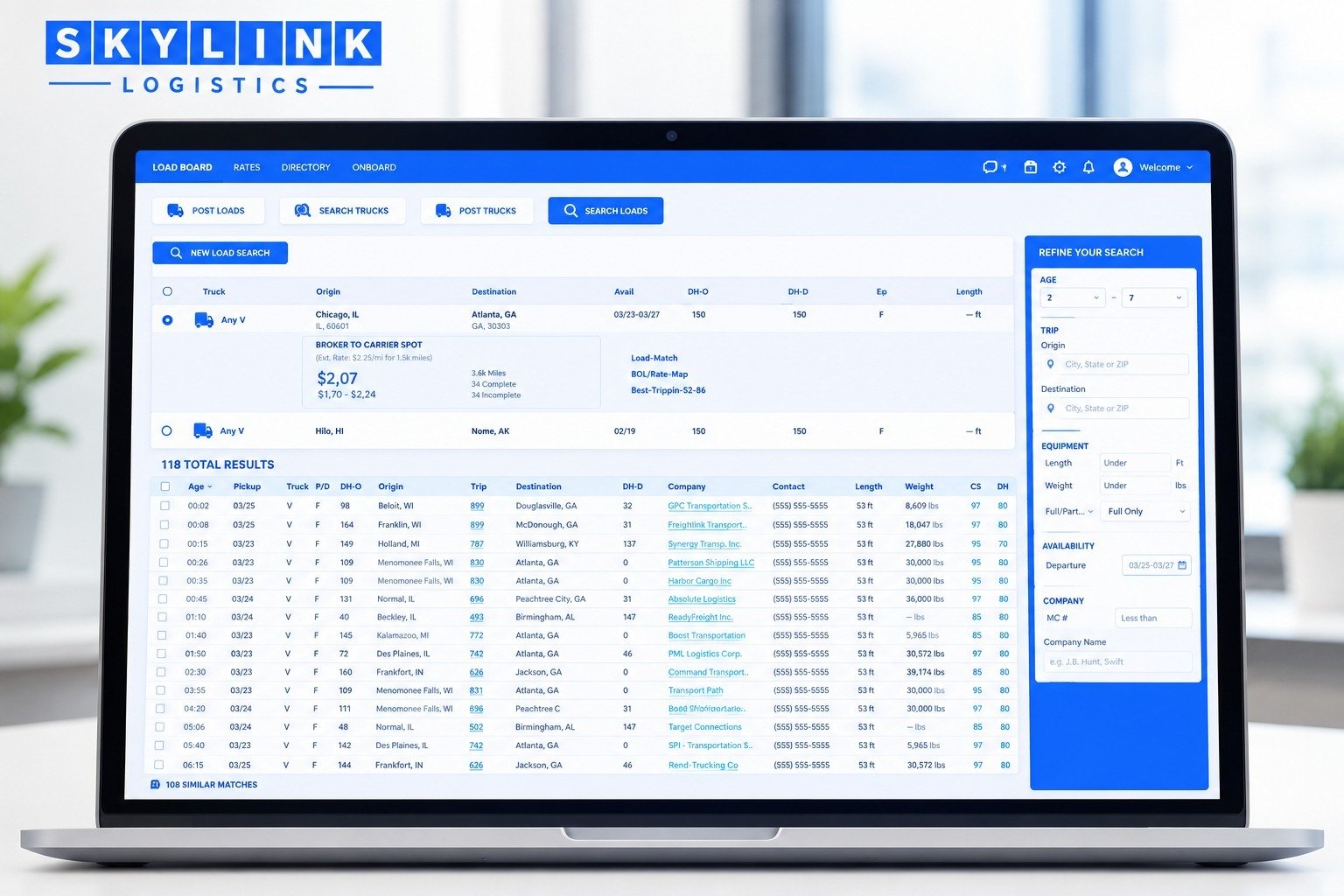
A load board is an online marketplace where brokers, shippers, and carriers connect to arrange freight transportation.
Load boards display available shipments with important information such as:
- Pickup location
- Delivery location
- Freight type
- Weight
- Equipment requirements
- Mileage
- Rate
- Pickup dates
- Broker information
For owner operators, a load board acts as a tool for finding freight opportunities. However, the information must be analyzed correctly before accepting a load.
A professional dispatcher looks beyond the basic rate and evaluates whether the load fits the overall business strategy.
What Makes a Good Load Board?
Not all platforms provide the same quality of information.
A good load board should help carriers make better decisions by providing:
Large Freight Availability
A useful platform should offer enough load options in different markets.
More options allow owner operators to:
- Compare rates
- Avoid accepting poor freight
- Find better routes
- Reduce empty miles
Accurate Rate Information
Experienced operators need to understand whether a load is fairly priced.
Important rate details include:
- Total pay
- Rate per mile
- Current market conditions
- Lane demand
Broker Information
Reliable load boards provide information that helps carriers evaluate brokers.
Before accepting freight, operators should consider:
- Broker reputation
- Payment history
- Communication quality
Advanced Search Features
A professional load board should allow filtering by:
- Equipment type
- Location
- Mileage
- Load size
- Pickup date
- Freight category
How Professional Dispatchers Read a Load Board
A beginner often looks at one thing:
"How much does this load pay?"
A professional dispatcher asks:
- How many miles are involved?
- What are the fuel costs?
- Is the route profitable?
- What freight is available after delivery?
- Is this broker reliable?
- Does this fit the driver's business goals?
The difference between beginners and professionals is understanding the complete picture.
Step 1: Start With Your Current Location
The first thing a dispatcher checks is where the truck is located.
Location affects:
- Available freight
- Market demand
- Deadhead miles
- Future opportunities
For example:
A truck sitting near a major distribution area may have several freight options, while a truck in a rural area may require repositioning.
A smart dispatcher does not only search nearby loads. They analyze where the truck needs to go next.
Step 2: Check Pickup and Delivery Locations
One of the biggest mistakes owner operators make is focusing only on the pickup location.
A professional dispatcher studies both:
- Where the load starts
- Where the load ends
A good delivery location should offer future opportunities.
For example:
A load from Dallas to Houston may pay less than another option, but if Houston has stronger outbound freight demand, it may create a better overall week.
Step 3: Calculate Rate Per Mile Correctly
The total load payment does not tell the complete story.
Dispatchers calculate:
Rate Per Mile = Total Load Pay ÷ Total Miles
But professional operators consider all miles.
Example:
- Load payment: $1,800
- Loaded miles: 700 miles
- Deadhead miles: 100 miles
- Total miles: 800 miles
Actual rate per mile:
$1,800 ÷ 800 = $2.25 per mile
The advertised rate may look higher if only loaded miles are considered.
Step 4: Analyze Deadhead Miles
Deadhead miles are miles driven without freight.
They reduce profitability because you still pay for:
- Fuel
- Maintenance
- Insurance
- Driver time
Professional dispatchers always ask:
"How far do I need to drive before earning money?"
A slightly lower paying load with fewer empty miles may produce better profit.
Step 5: Understand Load Details
Before accepting freight, carefully review:
Weight
Make sure the load matches your equipment capacity.
Check:
- Total weight
- Pallet count
- Loading requirements
Pickup Appointment
Consider:
- Pickup time
- Loading delays
- Facility reputation
Long waiting times can reduce profitability.
Delivery Requirements
Check:
- Appointment schedules
- Delivery windows
- Location restrictions
A difficult delivery can create unnecessary problems.
Step 6: Evaluate the Broker Before Booking
Experienced dispatchers do not work with every broker.
Before accepting a load, consider:
- Broker reliability
- Payment history
- Communication style
- Previous carrier experiences
A high-paying load from an unreliable broker can create payment issues later.
Step 7: Study Market Trends and Freight Lanes
Professional dispatchers understand that freight demand changes constantly.
Some factors affecting rates include:
- Season
- Location
- Industry demand
- Fuel prices
- Capacity levels
For example:
Agricultural areas may experience increased freight demand during harvest seasons.
Retail markets may become busier before major holidays.
Understanding these patterns helps owner operators make better decisions.
How to Find Better Loads Using an Owner Operator Load Board
An owner operator load board should be used strategically, not randomly.
Follow this process:
Create Your Preferred Search Filters
Set filters based on:
- Truck type
- Preferred states
- Minimum rate
- Maximum distance
- Load type
This saves time and removes unsuitable freight.
Compare Multiple Loads
Never accept the first available option.
Compare:
- Rate
- Distance
- Delivery location
- Future opportunities
The best load is usually the one that creates the most profitable route.
Plan Your Next Move
Professional dispatchers think ahead.
Before accepting a load, ask:
"Where will my truck be after delivery?"
A good freight decision considers the next opportunity, not only the current shipment.
Common Load Board Mistakes Owner Operators Make
Choosing the Highest Paying Load
A large payment does not always mean higher profit.
Consider total operating costs.
Ignoring the Return Route
A load can look profitable until you realize there is no good freight available afterward.
Accepting Every Load From a Familiar Broker
A trusted broker is valuable, but every load should still make business sense.
Not Tracking Market Rates
Without understanding current pricing, drivers may accept below-market freight.
Spending Too Much Time Searching
Finding loads manually can consume hours.
Many successful owner operators use dispatch support to handle freight research and negotiation. You can also explore more freight and business insights at Leuzon.
How Dispatchers Use Load Boards More Efficiently
Professional dispatchers improve load selection by combining:
- Freight data
- Market knowledge
- Broker relationships
- Route planning
They do not simply find loads.
They build freight strategies.
For example:
A dispatcher may reject a $2,000 load because it leaves the truck in a weak market. Instead, they may choose a $1,700 load that places the truck near higher-paying freight.
The goal is improving weekly revenue, not winning one load.
Can Owner Operators Become Better at Using Load Boards?
Yes.
Improvement comes from:
- Studying profitable lanes
- Tracking expenses
- Comparing accepted vs rejected loads
- Learning market patterns
- Understanding customers and brokers
A load board is only a tool. The results depend on how effectively it is used.
For more tips on freight, dispatch, and trucking business growth, check out our blog.
Frequently Asked Questions
Stop guessing on load boards — start booking smarter freight
Our dispatchers analyze rates, routes, and brokers every day. Let us help you find better loads and improve your weekly revenue.
(346) 214-5292 | dispatch@skylinkusa.com