7 Pro Tips for Logistics and Operational Efficiency in Trucking
In today’s freight market, simply keeping your wheels moving is not enough.
Owner-operators and small fleets need to think like business owners. Every load, lane, fuel stop, broker call, invoice, and empty mile affects the final profit.
That is where logistics and operational efficiency become important.
Good operational efficiency means the truck is not only moving. It is moving with a purpose. It means fewer wasted miles, cleaner paperwork, better route planning, stronger rate decisions, and faster cash flow.
For carriers across the USA, the goal is simple:
- Spend less time fixing problems
- Spend more time running profitable freight
This guide keeps the client’s original seven-point idea, but organizes it into a stronger trucking business framework. You will learn how to control costs, improve RPM, reduce deadhead, use better dispatch planning, and protect weekly profit.
A professional truck dispatch service can support this process by helping carriers plan loads, communicate with brokers, manage paperwork, and keep the truck moving with better discipline.
Why Logistics and Operational Efficiency Matters for Owner-Operators
Trucking profit is not only created by high-paying loads.
Profit is protected by systems.
A carrier can book a strong load and still lose money if the process is weak. Too much deadhead, poor fuel planning, bad paperwork, broker delays, weak lanes, and slow payment can all reduce the real value of the load.
Operational efficiency helps carriers control these leaks.
It supports:
- Better cost control
- Cleaner dispatch planning
- Lower deadhead
- Stronger RPM
- Faster paperwork flow
- Better broker communication
- Smarter equipment use
- Improved cash flow
- More consistent weekly movement
For owner-operators, efficiency is not a corporate buzzword.
It is the difference between being busy and being profitable.
1. Master Cost Control Before Chasing More Loads
The client’s original first point was right:
Operational efficiency starts with plugging the leaks in daily expenses.
Many carriers focus only on finding more loads. That helps only if the truck is already running efficiently.
If the truck is burning fuel, losing time, and running too many empty miles, more loads will not fix the deeper problem.
Cost control starts with three areas:
- Deadhead miles
- Fuel usage
- Time waste
Minimize Deadhead Miles
Deadhead is one of the fastest ways to reduce profit.
Driving empty means the carrier is spending fuel, time, and equipment life without earning revenue.
A strong dispatch plan should not only check the next load. It should check where the load leaves the truck after delivery.
Before accepting freight, ask:
- How far is the pickup?
- What happens after delivery?
- Are reloads available nearby?
- Will the truck need to deadhead to a better market?
- Does the rate cover that risk?
A dispatcher should help evaluate these questions before the carrier accepts the load.
Optimize Fuel Strategy
Fuel is one of the biggest daily cost pressures for carriers.
Owner-operators can monitor diesel price movement through the U.S. Energy Information Administration’s Gasoline and Diesel Fuel Update.
Fuel strategy can include:
- Reducing idle time
- Planning fuel stops
- Avoiding unnecessary miles
- Watching regional diesel prices
- Choosing lanes with lower waste
- Using fuel cards when they make sense
- Matching load weight with route cost
Small daily decisions can create meaningful savings across a full month.
Pro Tip 1: Do Not Treat Deadhead as a Small Problem
Deadhead is not just empty driving.
It is unpaid fuel, unpaid time, and lost opportunity.
If a load creates too many empty miles before pickup or after delivery, the posted rate may not show the real profit.
Did You Know 1: Fuel Cost Can Change the Value of the Same Load
The same load can be profitable one week and weaker the next week if fuel prices change.
That is why owner-operators should compare the load rate with total miles, deadhead, and fuel cost before accepting freight.
2. Build a Cleaner Back-Office System
The client’s second point was strategic back-office management.
This is important.
Time spent chasing paperwork, broker setup packets, invoices, rate confirmations, and payment follow-up is time taken away from the road.
A strong back-office system helps the carrier stay organized.
It can support:
- Broker setup packets
- Rate confirmations
- Insurance documents
- Carrier packets
- Pickup details
- Delivery details
- Detention notes
- Lumper receipts
- Invoicing
- Factoring paperwork
- Payment follow-up
Poor admin flow creates stress.
It can also delay payment.
Before working with unfamiliar companies, carriers can use the official FMCSA SAFER Company Snapshot to review available company identification and safety information.
A dispatch team can help keep these details organized so the driver can focus on safety and delivery.
Did You Know 2: Paperwork Delays Are Operational Inefficiency
Operational efficiency is not only about fuel and miles.
If documents are missing, invoices are delayed, or broker setup is handled poorly, cash flow can suffer.
Clean paperwork helps protect the business side of trucking.
3. Improve RPM With Lane Data and Broker Relationships
The client’s third point focused on consistent rate improvement.
That idea should stay.
Securing a better RPM requires more than logging into a load board.
RPM means revenue per mile. But serious carriers should look at the full movement of the truck, not only loaded miles.
Better RPM comes from:
- Stronger lane selection
- Lower deadhead
- Better negotiation
- Better reload planning
- Stronger broker communication
- Equipment-specific freight choices
Understand Regional Lane Data
Freight rates are regional.
Some markets have stronger outbound freight. Some markets are harder to leave. Some lanes produce better reload options than others.
Carriers and dispatchers can review freight market movement through tools such as DAT Trendlines.
Lane data helps carriers negotiate from a stronger position.
If a destination market is weak, the rate should reflect that risk.
Build Broker Relationships
Spot market rates can be unstable.
Long-term broker relationships can help carriers find more consistent lanes and avoid constantly starting from zero.
A strong broker relationship can lead to:
- Better communication
- Repeat freight
- Cleaner paperwork
- Faster setup
- More predictable lanes
- Stronger trust over time
A dispatcher can help manage these relationships and protect the carrier from weak offers.
Micro Scenario: The Busy Carrier With Weak Profit
An owner-operator books load after load for a full week.
The truck stays moving.
But by the weekend, the numbers do not look strong.
There were too many empty miles. One load had a long delay. Another load paid well but ended in a weak market. Paperwork was late, and payment follow-up took extra time.
The carrier was busy, but the operation was not efficient.
A better dispatch system could have checked the route, broker, paperwork, and reload path before each decision.
The lesson is simple:
Busy does not always mean profitable.
4. Use Professional Negotiation to Protect Rates
The client’s fourth point was professional negotiation.
This matters because brokers negotiate every day.
Drivers are often negotiating while driving, loading, unloading, or managing multiple calls. That creates pressure.
A professional dispatcher has more time to compare rates, check lane conditions, ask better questions, and push back on weak offers.
A dispatcher should ask:
- What is the commodity?
- What is the weight?
- Are there extra stops?
- Is detention paid?
- Is layover covered?
- Are pickup and delivery times realistic?
- Does the lane lead to a good market?
- Is the broker reliable?
- Does the rate cover fuel and deadhead risk?
Professional negotiation is not only about asking for more money.
It is about protecting the carrier from bad load terms.
A carrier who wants dispatch support can review Skylink’s truck dispatch pricing before starting.
5. Target Freight That Fits Your Equipment
The client’s fifth point focused on high-demand freight types.
This is important because equipment type affects earning potential.
Not every load fits every truck.
A box truck, hotshot, flatbed, conestoga, step deck, reefer, and dry van all need different dispatch strategies.
Box Trucks and Hotshots
The original blog mentioned box trucks and hotshots because expedited and partial-load freight can create strong opportunities when planned correctly.
A box truck dispatch service should focus on suitable local, regional, and metro-to-metro freight.
A hotshot dispatch service should protect mileage, timing, equipment limits, and urgent freight opportunities.
Flatbeds, Step Decks, and Conestogas
Flatbed and specialized equipment can create stronger opportunities when the freight matches the equipment.
A flatbed dispatch service should consider tarping, securement, weight, loading time, and lane quality.
A step deck dispatch service should focus on dimensions, specialized freight, and correct equipment fit.
A conestoga dispatch service should focus on protected freight where the carrier can avoid standard tarping delays.
The key is simple:
The load must fit the truck, the route, and the revenue plan.
6. Use Technology for Route Optimization
The client’s sixth point was technology for route optimization.
This should stay because modern logistics needs modern tools.
Route optimization helps carriers reduce delays, avoid unnecessary miles, plan fuel stops, and protect available hours.
A carrier should consider:
- GPS routing
- Weather conditions
- Road construction
- Fuel stop planning
- Traffic delays
- Delivery appointment windows
- Parking availability
- Hours-of-service limits
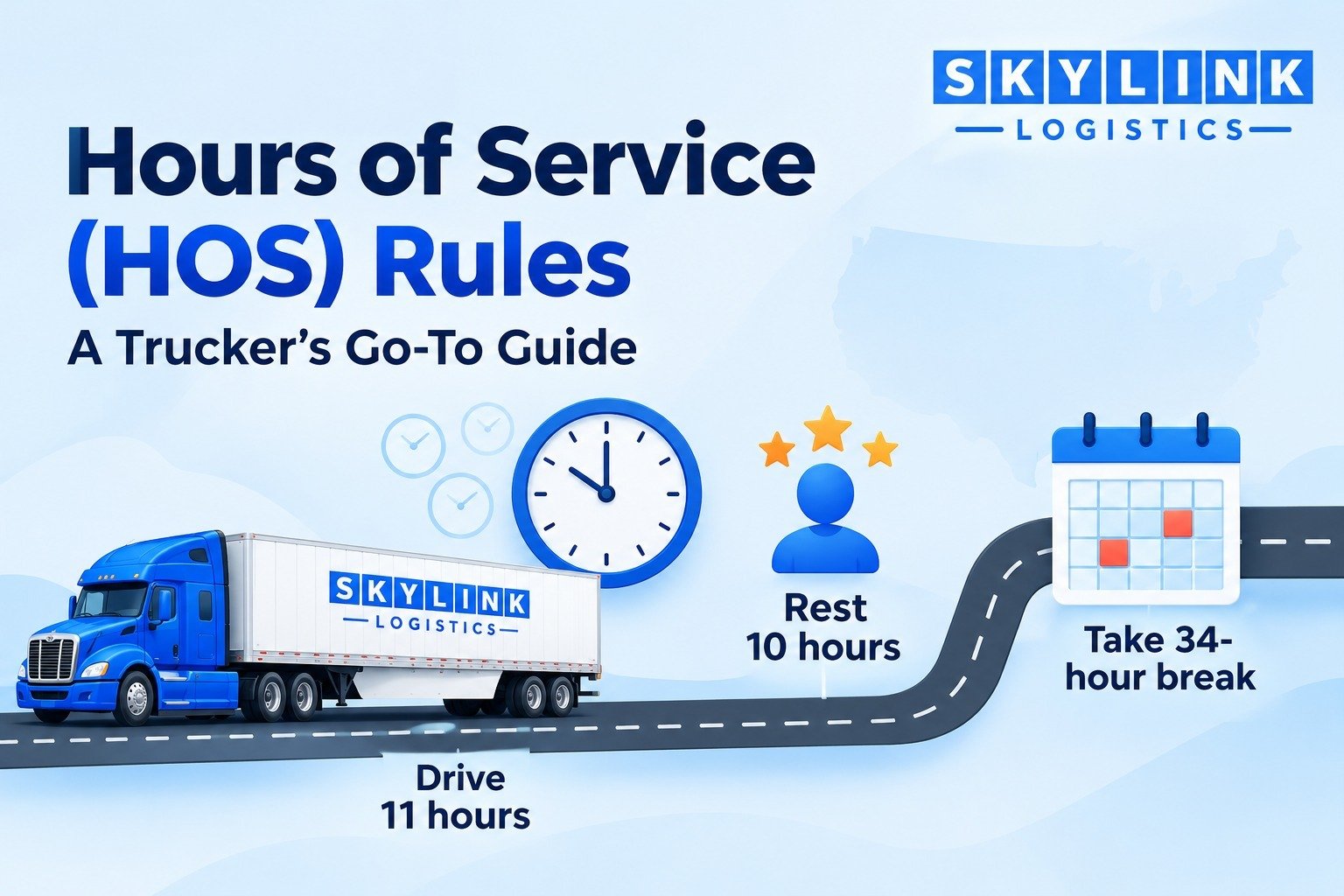
The FMCSA provides a summary of hours-of-service regulations, which matters because timing and available driving hours affect dispatch planning.
A dispatcher cannot control every delay.
But better planning can reduce avoidable waste.
7. Protect Cash Flow With Freight Factoring
The client’s seventh point was freight factoring.
Cash flow is a major part of operational efficiency.
Waiting 30 to 60 days for payment can create pressure. Carriers still need money for fuel, maintenance, insurance, equipment, and driver pay.
Freight factoring can help some carriers get paid faster, but it should be explained honestly.
Factoring is not a magic solution.
It is a cash-flow tool.
It can support carriers who need faster access to funds after delivery.
Carriers can review Skylink’s factoring setup page to understand how payment support may fit into their process.
Operational Efficiency Table
| Efficiency Area | What Can Go Wrong | How to Fix It |
|---|---|---|
| Deadhead miles | Empty miles burn fuel and reduce profit | Plan reloads before delivery |
| Fuel cost | Poor route planning increases expenses | Track diesel prices and plan fuel stops |
| Back-office work | Paperwork delays payment | Organize rate confirmations and documents |
| RPM | Loads look good but perform weakly | Compare total miles, deadhead, and reload options |
| Broker communication | Weak terms reduce profit | Ask better questions before booking |
| Equipment fit | Wrong freight wastes time or creates risk | Match loads to truck type |
| Route planning | Delays reduce available hours | Use routing tools and plan around HOS |
| Cash flow | Slow payment creates pressure | Use factoring carefully when needed |
How Skylink Helps Carriers Improve Efficiency
At Skylink Logistics, we understand that you are not just driving a truck.
You are running a business.
That original client message should stay because it speaks directly to owner-operators.
Skylink helps carriers improve logistics and operational efficiency by supporting the hard parts of dispatch operations.
This can include:
- Load search
- Lane planning
- Deadhead reduction
- Broker communication
- Rate negotiation
- Carrier setup support
- Paperwork handling
- Factoring coordination
- Equipment-specific dispatch
- Weekly route planning
Skylink supports carriers operating box trucks, hotshots, flatbeds, reefers, step decks, conestogas, and other equipment types.
The goal is to help carriers avoid cheap freight, reduce wasted time, and make better weekly decisions.
Carriers can start through the carrier setup portal, review the truck dispatch pricing, or contact Skylink Logistics to speak with the team.
Pro Tip 2: Judge Efficiency by the Full Week
Do not judge operational efficiency by one load.
Track the whole week.
Look at loaded miles, empty miles, fuel cost, downtime, broker quality, payment speed, paperwork flow, and average RPM.
That gives a clearer picture of whether the business is actually improving.
Final Word
Logistics and operational efficiency are not optional for owner-operators.
They are the foundation of a profitable trucking business.
A carrier can stay busy and still struggle if the operation is not clean. Deadhead, fuel waste, weak broker communication, delayed paperwork, and poor lane planning can all reduce profit.
The client’s original seven ideas are strong:
- Control costs
- Clean the back office
- Improve RPM
- Negotiate better
- Target the right freight
- Use route technology
- Protect cash flow
When these areas work together, the carrier has a better chance of building a stronger, more stable business.
If you are an owner-operator or fleet owner looking to improve routes, reduce wasted miles, and protect weekly profit, Skylink Logistics can help.
Start through the carrier setup portal or contact Skylink Logistics today.
FAQs
What is logistics and operational efficiency in trucking?
Logistics and operational efficiency in trucking means running the truck with less waste, better planning, cleaner paperwork, stronger lane decisions, and better control over cost and time.
Why is operational efficiency important for owner-operators?
Operational efficiency is important because owner-operators must protect profit on every mile. Fuel, deadhead, delays, paperwork, broker issues, and weak lanes can all reduce weekly earnings.
How can truckers reduce deadhead miles?
Truckers can reduce deadhead by checking destination markets, planning reloads before delivery, avoiding weak lanes, and using dispatch support to compare better load options.
How does dispatch support improve operational efficiency?
Dispatch support can improve efficiency by helping with load search, lane planning, rate negotiation, broker communication, paperwork, setup packets, and reload planning.
Why does back-office management matter in trucking?
Back-office management matters because missing documents, late invoices, poor broker setup, and slow payment follow-up can hurt cash flow and waste time.
Can freight factoring improve trucking efficiency?
Freight factoring can help some carriers improve cash flow by providing faster payment access after delivery. It should be used carefully and understood as a cash-flow tool.
What truck types can Skylink support?
Skylink can support multiple truck types, including box trucks, hotshots, flatbeds, reefers, step decks, conestogas, and other carrier setups.
Where can carriers start with Skylink?
Carriers can start through the carrier setup portal or contact the team through the contact page.
Posted By: Kiran Noor