

Self dispatch vs dispatcher comparison helps owner operators decide if a truck dispatcher is worth the fee for their business.
Is a truck dispatcher worth it depends on your available time, negotiation skills, and desire for no forced dispatch support.
Truck dispatch service provides load search, rate negotiation, and paperwork support for owner operators.
Owner operator dispatch with no forced dispatch gives you full control over every load decision.
Choosing between self dispatch and a dispatcher requires balancing cost, time, and control tradeoffs.
Self Dispatch vs Dispatcher: Is a Truck Dispatcher Worth It?
Every owner operator faces this question at some point. Should you search your own loads and manage your own paperwork, or should you work with a truck dispatcher? This guide compares self dispatch and dispatcher support so you can decide what fits your business and your schedule.
Table of Contents
- Key Takeaways
- Quick Answer
- What Is Self Dispatch?
- What Does a Truck Dispatcher Do?
- Self Dispatch vs Dispatcher: Key Differences
- Calculating the Real Cost of Self Dispatch
- When Self Dispatch Makes Sense
- When a Dispatcher Is Worth It
- A Hybrid Approach: Using Both
- How Skylink Logistics Supports Owner Operators
- FAQs
Key Takeaways
- Self dispatch avoids dispatch fees but requires real time for load search, negotiation, and paperwork.
- A dispatcher can save time and often negotiates rates daily, but charges a percentage or flat fee.
- A reputable dispatcher should always operate on a no forced dispatch basis, keeping the final decision with you.
- The right choice depends on your available time, comfort with negotiation, and business goals.
Quick Answer
Self dispatch works well for drivers who have time, experience, and comfort negotiating with brokers. A truck dispatcher is often worth it for drivers who want to focus on driving, save time on load searching, and get help with rate negotiation, broker communication, and paperwork. The right choice depends on your time, skill, and business goals.
What Is Self Dispatch?
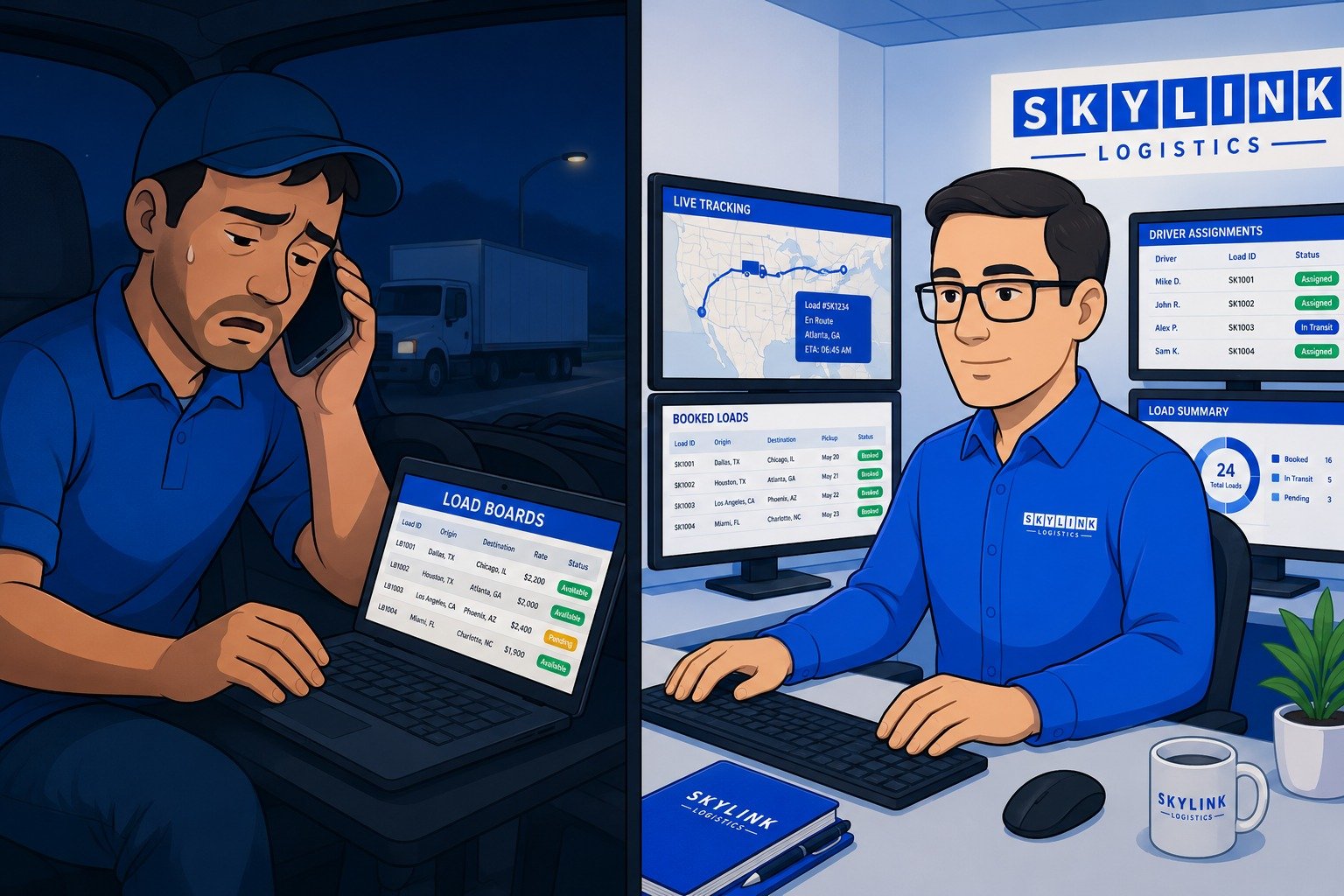
Self dispatch means the owner operator handles their own load search, rate negotiation, broker communication, and paperwork without outside help. This requires:
- Time to search load boards regularly
- Comfort negotiating rates with brokers
- Skill in checking broker reliability
- Ability to manage rate confirmations, BOLs, and PODs
- Discipline to plan lanes and reduce deadhead
Self dispatch can save money on dispatch fees, but it also takes real time away from driving.
What Does a Truck Dispatcher Do?
A truck dispatcher supports owner operators by handling parts of the dispatch process, such as:
- Searching load boards and broker networks
- Negotiating rates
- Communicating with brokers before and after booking
- Helping organize paperwork like rate confirmations and PODs
- Planning routes to reduce deadhead
- Coordinating with factoring companies when needed
A dispatcher typically charges a percentage of the load rate or a flat fee, depending on the service structure.
Did You Know?
A trustworthy dispatch service should never force you into a load. No forced dispatch means the final decision always stays with the driver, even when the dispatcher recommends a load.
Self Dispatch vs Dispatcher: Key Differences
| Factor | Self Dispatch | Working With a Dispatcher |
|---|---|---|
| Time required | High, requires active load searching | Lower, dispatcher searches for you |
| Cost | No dispatch fee | Percentage or flat dispatch fee |
| Rate negotiation | Driver negotiates directly | Dispatcher negotiates on your behalf |
| Paperwork support | Driver manages alone | Dispatcher helps organize documents |
| Control over loads | Full control | Full control if no forced dispatch is used |
| Best fit | Experienced, time available drivers | Drivers wanting more time to drive |
Calculating the Real Cost of Self Dispatch
Dispatch fees are easy to see, but self dispatch has hidden costs too. Consider tracking:
- Hours per week spent searching loads
- Hours spent negotiating with brokers
- Time spent organizing paperwork
- Missed loads due to slow response time while driving
Comparing this time cost against a dispatch fee can help you see the full picture, not just the percentage charged.
When Self Dispatch Makes Sense
Self dispatch can work well if you:
- Have strong broker relationships already
- Understand rate negotiation confidently
- Have time to search loads consistently
- Want full control without paying a dispatch fee
- Enjoy managing the business side of trucking
When a Dispatcher Is Worth It
A dispatcher can be worth it if you:
- Want more time focused on driving
- Struggle to find consistent, fair paying loads
- Do not enjoy negotiating with brokers
- Need help staying organized with paperwork
- Want support planning lanes and reducing deadhead
For more on choosing dispatch support, see our guide on how to choose a truck dispatcher.
Pro Tip
Try tracking how many hours per week you spend searching loads and negotiating rates. If that time could be spent driving profitable miles instead, a dispatcher may pay for itself.
A Hybrid Approach: Using Both
Some owner operators use a hybrid approach—self dispatching part of the time and using a dispatcher during busy weeks or when running unfamiliar lanes. This flexibility can work well if your dispatch service does not require a long term exclusive commitment.
How Skylink Logistics Supports Owner Operators
Skylink Logistics offers dispatch support built around no forced dispatch, meaning you always keep the final decision on every load. Our team handles load search, rate negotiation, broker communication, and paperwork support across dry van, reefer, flatbed, and other equipment types.
For dispatch fee details, see our truck dispatch pricing page.
FAQs About Self Dispatch vs Dispatcher
Find answers to common questions about self dispatch vs dispatcher and whether a truck dispatcher is worth it.
Ready to Explore Dispatch Support?
Skylink Logistics offers no forced dispatch support, helping owner operators find suitable loads while keeping full control over every decision.
Start Carrier Setup | Contact Skylink Logistics
Call: (346) 214-5292 | Email: dispatch@skylinkusa.com