

Freight markets move in cycles, and a soft market with lower rates and slower demand can put real pressure on independent carriers.
A soft freight market happens when available truck capacity outpaces freight demand, which pushes rates down as carriers compete for a smaller pool of loads.
During a strong market, carriers can often afford to be less selective, but during a soft market, smart route and lane selection becomes far more important for protecting profitability.
During a soft market, freight tends to concentrate more heavily around major population centers and distribution hubs, since overall shipment volume is lower.
Building familiarity with a few different lanes or regions gives you more flexibility to shift toward whichever area currently offers stronger freight activity.
Brokers and shippers often prioritize carriers they already trust and have worked with successfully in the past, making relationships especially valuable during downturns.
Surviving a soft freight market, soft freight market route planning, freight market downturn, independent carrier tips, freight dense regions.
Surviving a Soft Freight Market: Strategic Route Planning for Independent Carriers
Freight markets move in cycles, and a soft market with lower rates and slower demand can put real pressure on independent carriers. While you cannot control overall market conditions, strategic route planning can help protect your income and keep your business steady even when rates drop across the board.
Table of Contents
- Understanding What a Soft Freight Market Means
- Why Route Planning Matters During a Downturn
- Focusing on Freight Dense Regions
- Diversifying Your Lane Options
- Strengthening Broker and Shipper Relationships
- Adjusting Your Break Even Expectations
- Using Data to Guide Decisions
- How Dispatch Support Helps
- FAQ
Understanding What a Soft Freight Market Really Means
A soft freight market happens when available truck capacity outpaces freight demand, which pushes rates down as carriers compete for a smaller pool of loads. This can happen due to broader economic shifts, seasonal slowdowns, or an influx of new carriers entering the market.
Recognizing that a soft market is a normal, recurring part of the trucking industry helps you plan proactively instead of reacting with panic when rates start to soften.
Did You Know?
A soft freight market happens when available truck capacity outpaces freight demand, pushing rates down as carriers compete for a smaller pool of loads.
Why Route Planning Becomes More Important During a Downturn
During a strong market, carriers can often afford to be less selective, since demand is high enough that most loads pay reasonably well. During a soft market, that margin for error shrinks significantly, making smart route and lane selection far more important for protecting profitability.
Careful planning helps you avoid long deadhead runs, target regions with relatively stronger demand, and make the most of every mile during a period when rates are already under pressure.
Focusing on Freight Dense Regions
During a soft market, freight tends to concentrate more heavily around major population centers and distribution hubs, since overall shipment volume is lower. Prioritizing routes through these freight dense regions increases your chances of finding consistent loads, even as overall market rates soften.
Avoiding remote or low density regions during a downturn helps reduce the risk of getting stuck with long deadhead runs while waiting for a load in an area with limited freight activity.
Pro Tip
During a soft market, prioritize routes through major population centers and distribution hubs where freight volume remains strongest.
Diversifying Your Lane Options
Relying too heavily on a single lane or region can leave you vulnerable if that specific market softens more than others. Building familiarity with a few different lanes or regions gives you more flexibility to shift toward whichever area currently offers stronger freight activity.
This does not mean abandoning your usual routes entirely, but rather maintaining enough flexibility to adjust when one particular lane weakens more than expected.
Strengthening Broker and Shipper Relationships
During a soft market, brokers and shippers often prioritize carriers they already trust and have worked with successfully in the past. Strengthening these relationships during stronger market periods pays off significantly when demand softens, since established carriers are more likely to receive consistent freight offers even as competition increases.
Consistent communication, reliable on time performance, and professional handling all contribute to becoming a carrier that brokers turn to first, even during challenging market conditions.
Adjusting Your Break Even Expectations Realistically
A soft market may require accepting slightly lower rates than during stronger periods, but this should always be weighed against your break even cost per mile. Route planning that keeps you within freight dense regions and minimizes deadhead helps protect your margin even when individual load rates are lower than usual.
Avoid the trap of accepting rates so low that you are effectively losing money just to keep the truck moving. Strategic planning should aim to maximize efficiency, not simply accept any available freight regardless of true cost.
Using Data to Guide Decisions During a Downturn
Market rate data and freight volume trends become especially valuable during a soft market, helping you identify which regions and lanes are holding up relatively well compared to others experiencing steeper declines. Reviewing this information regularly supports more informed route decisions instead of relying on outdated assumptions from a stronger market period.
How Dispatch Support Helps Independent Carriers Navigate a Soft Market
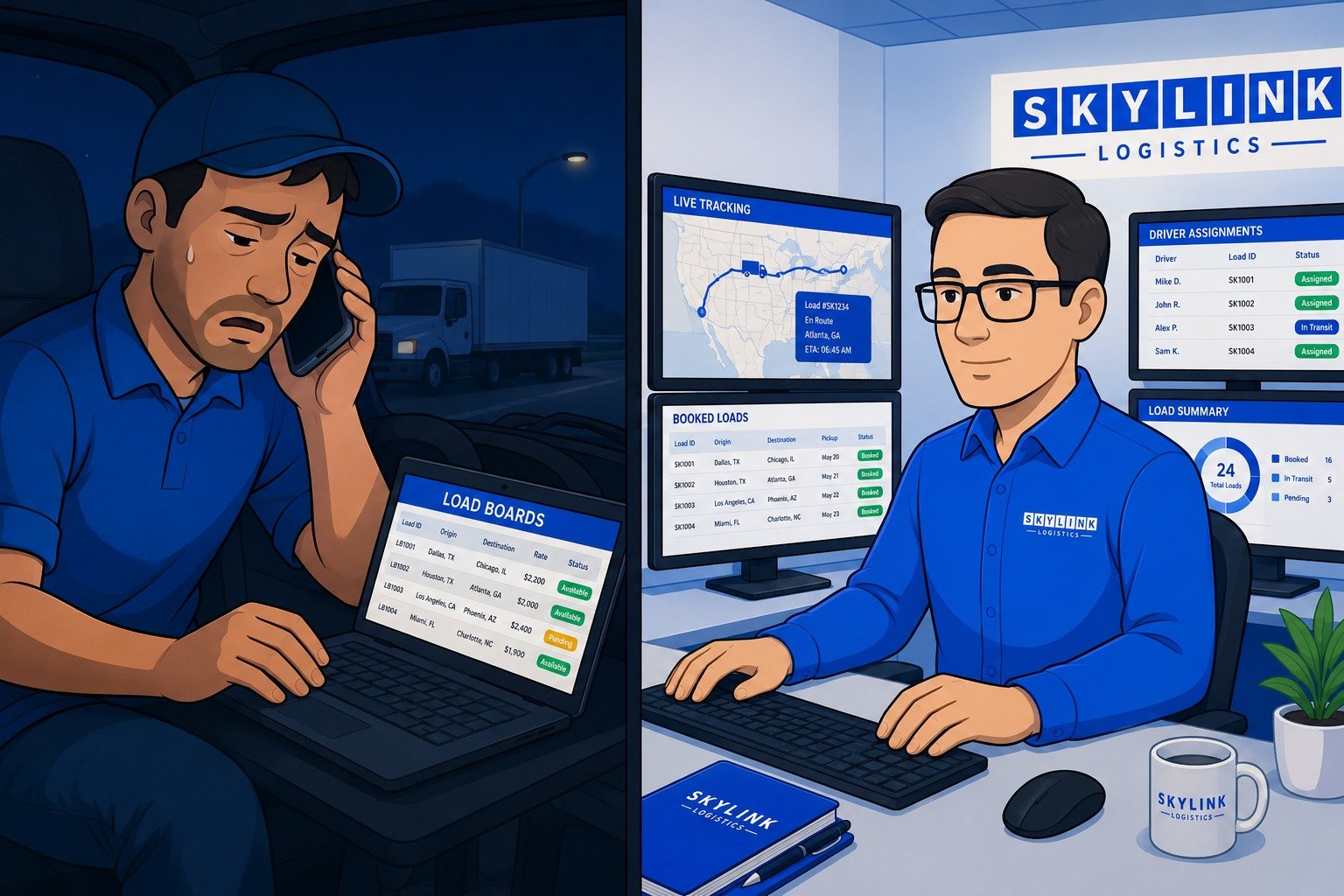
Tracking shifting freight patterns and identifying the strongest available lanes takes constant market attention, which can be difficult to manage alone while also handling daily driving responsibilities. A dispatch partner who actively monitors these shifts can help steer your business toward the most resilient opportunities during challenging market periods.
Skylink Logistics supports independent carriers with route planning and load search built around real time market conditions, helping protect your business through both strong and soft freight cycles.
For more on surviving market shifts, see our guide on surviving a slow trucking market.
FAQ
Ready to Navigate Market Shifts With Confidence?
Skylink Logistics helps independent carriers with route planning and load search built around real time market conditions, with no forced dispatch.
Start Carrier Setup | Contact Skylink Logistics
Call: (346) 214-5292 | Email: dispatch@skylinkusa.com