Freight Factoring Explained: Improving Cash Flow for Your Trucking Company
Freight factoring.
Freight factoring for trucking companies.
Freight factoring for owner operators.
Freight factoring and trucking cash flow.
Best freight factoring options for carriers.
Freight factoring and recourse vs non recourse.
Freight factoring for small fleets.
Compare freight factoring companies.
Freight factoring and invoice factoring explained.
Freight factoring for trucking business financing.
Freight factoring is a financial service where a trucking company sells its unpaid freight invoices to a factoring provider. The factoring company provides immediate payment for the invoice, allowing the carrier to access working capital faster.
Trucking factoring helps owner-operators and carriers avoid waiting 30, 60, or even 90 days for payment. Instead, carriers can receive funds shortly after completing a shipment and submitting approved invoices.
Freight invoice factoring improves trucking cash flow by providing working capital for fuel purchases, truck repairs, insurance payments, and business expenses. This allows carriers to continue operating without waiting for previous loads to be paid.
Owner operator financial solutions like freight factoring support business growth. With improved cash flow, carriers can accept more loads, maintain equipment, hire drivers, and expand operations.
Recourse vs non recourse factoring: with recourse factoring, the carrier remains responsible if the customer does not pay the invoice. With non-recourse factoring, certain payment risks are transferred to the factoring company.
Recourse factoring advantages include lower factoring fees, easier approval process, and more affordable option for many carriers. Non-recourse factoring advantages include reduced payment risk, more financial protection, and more predictable cash flow.
Trucking business financing options include freight factoring and traditional business loans. Freight factoring offers faster approval, is based on invoices, provides immediate access to cash, and has no traditional loan repayment structure.
Carrier cash flow management improves when carriers understand freight factoring costs, choose the right factoring company, and review contract terms carefully. Common costs include factoring fees and additional service fees related to account management, processing, and funding services.
Freight factoring companies should be evaluated based on fee structure, customer support, contract terms, and industry experience. A provider familiar with trucking understands freight invoices, broker payments, and carrier challenges.
For more freight and business insights, visit Leuzon. For more articles on trucking operations, check out our blog.
Introduction
Cash flow is one of the biggest challenges facing independent carriers and trucking companies.
A carrier may complete a delivery today but wait weeks or even months before receiving payment from a broker or shipper. During that waiting period, the business still needs money to cover important expenses such as:
- Fuel
- Insurance
- Maintenance
- Truck payments
- Driver wages
- Repairs
This delay between completing a load and receiving payment can create serious financial pressure, especially for small trucking companies and owner-operators.
Freight factoring is a financial solution designed to help carriers access money faster by selling their unpaid freight invoices to a factoring company.
Instead of waiting 30, 60, or even 90 days for payment, carriers can receive funds shortly after completing a shipment.
Understanding how freight factoring works, its benefits, costs, and different options can help trucking businesses make smarter financial decisions and maintain healthier cash flow.
What Is Freight Factoring?
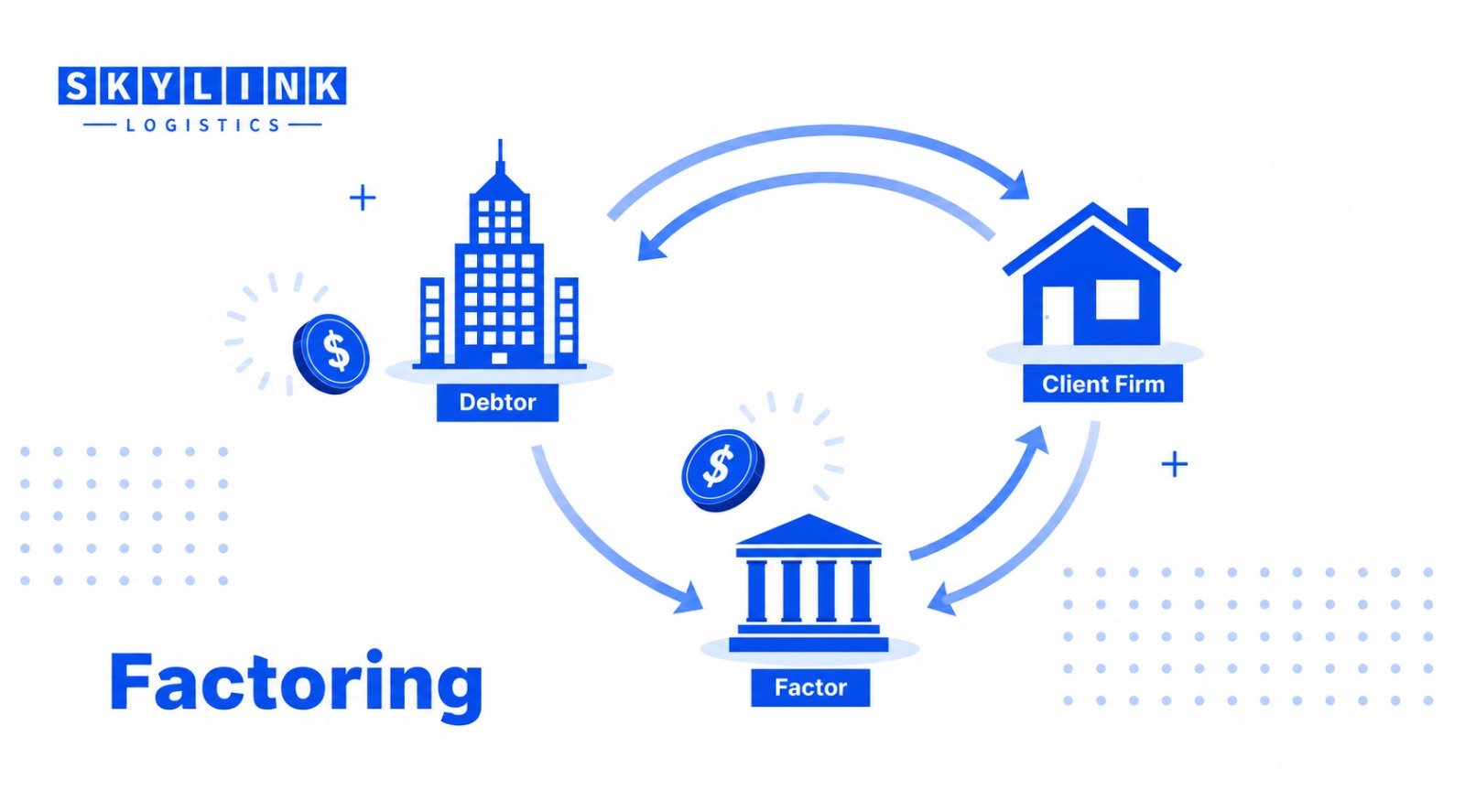
Freight factoring is a financial service where a trucking company sells its unpaid freight invoices to a factoring provider.
The factoring company provides immediate payment for the invoice, allowing the carrier to access working capital faster.
The process usually works like this:
- A carrier completes a freight delivery.
- The shipper or broker receives the invoice.
- The carrier submits the invoice to a factoring company.
- The factoring company advances a percentage of the invoice value.
- The factoring company receives payment from the customer.
Instead of waiting weeks for payment, the carrier receives cash almost immediately.
Why Cash Flow Matters in Trucking
Unlike many businesses, trucking companies have significant upfront expenses.
Before receiving payment for a load, carriers may already have paid for:
- Diesel fuel
- Tolls
- Repairs
- Maintenance
- Insurance
- Permits
A delay in payment can create problems such as:
- Missed payments
- Reduced ability to accept new loads
- Emergency borrowing
- Limited business growth
Strong cash flow allows carriers to operate more confidently and take advantage of better freight opportunities.
How Freight Factoring Helps Owner-Operators
1. Faster Access to Money
The biggest advantage of freight factoring is faster payment.
Instead of waiting weeks for invoices to be processed, carriers can receive funds shortly after submitting approved invoices.
This helps maintain daily operations without financial interruptions.
2. Reduces Cash Flow Pressure
Freight factoring provides working capital that can be used for:
- Fuel purchases
- Truck repairs
- Insurance payments
- Business expenses
This allows carriers to continue operating without waiting for previous loads to be paid.
3. Supports Business Growth
Growth requires available capital.
With improved cash flow, carriers can:
- Accept more loads
- Maintain equipment
- Hire drivers
- Expand operations
A company with consistent cash flow has more flexibility when opportunities appear.
Types of Freight Factoring
There are two main types of freight factoring:
- Recourse factoring
- Non-recourse factoring
Understanding the difference is important before choosing a factoring solution.
Recourse Freight Factoring
With recourse factoring, the carrier remains responsible if the customer does not pay the invoice.
If the broker or shipper fails to pay, the carrier may need to repay the factoring company.
Advantages of Recourse Factoring
- Lower factoring fees
- Easier approval process
- More affordable option for many carriers
Disadvantages of Recourse Factoring
- Higher financial responsibility
- Carrier carries more risk
Recourse factoring is often chosen by businesses that work with reliable customers and want lower costs.
Non-Recourse Freight Factoring
Non-recourse factoring transfers certain payment risks to the factoring company.
If an approved customer fails to pay due to specific reasons, the factoring company may absorb the loss.
Advantages of Non-Recourse Factoring
- Reduced payment risk
- More financial protection
- More predictable cash flow
Disadvantages of Non-Recourse Factoring
- Higher fees
- More qualification requirements
Non-recourse factoring may appeal to carriers who prioritize financial security.
Freight Factoring Costs
Factoring companies charge fees for providing faster access to money.
Costs may depend on:
- Invoice amount
- Customer creditworthiness
- Payment terms
- Factoring agreement
- Industry risk
Common costs include:
Factoring Fee
This is the percentage charged by the factoring company for advancing funds.
Additional Service Fees
Some providers may charge fees related to:
- Account management
- Processing
- Funding services
Carriers should carefully review agreements before choosing a provider.
Freight Factoring vs Traditional Business Loans
Many trucking companies compare factoring with traditional financing.
Freight Factoring
Advantages:
- Faster approval
- Based on invoices
- Immediate access to cash
- No traditional loan repayment structure
Business Loans
Advantages:
- Larger financing options
- Fixed repayment schedules
- Long-term funding
The best option depends on the company's financial needs and goals.
When Should a Trucking Company Consider Freight Factoring?
Freight factoring may be useful when a carrier:
- Has consistent freight volume
- Experiences payment delays
- Needs working capital
- Wants to grow operations
- Has difficulty managing expenses between payments
It is especially common among:
- New trucking companies
- Small fleets
- Independent owner-operators
How to Choose a Freight Factoring Company
Before selecting a provider, carriers should consider:
Fee Structure
Understand:
- Factoring rates
- Additional charges
- Contract requirements
Customer Support
Choose a provider with reliable communication and support.
Contract Terms
Review:
- Agreement length
- Cancellation policies
- Funding conditions
Industry Experience
A provider familiar with trucking understands:
- Freight invoices
- Broker payments
- Carrier challenges
Common Freight Factoring Mistakes to Avoid
Choosing Based Only on Low Fees
The cheapest option is not always the best.
Consider:
- Service quality
- Contract flexibility
- Payment speed
Ignoring Contract Details
Always review:
- Terms
- Responsibilities
- Fees
- Requirements
Using Factoring Without Financial Planning
Freight factoring improves cash flow, but carriers should still manage expenses carefully.
How Dispatch Support and Financial Management Work Together
Running a successful trucking company requires both operational and financial efficiency.
While dispatch services help carriers:
- Find freight
- Manage broker communication
- Improve load planning
financial tools such as freight factoring help carriers maintain steady cash flow.
Together, efficient freight management and financial planning allow carriers to build stronger operations.
How Skylink Logistics Helps Carriers Build Efficient Operations
Growing a successful trucking business requires reliable freight opportunities, organized operations, and strong financial management.
Skylink Logistics supports owner-operators and carriers by helping manage freight coordination, load opportunities, and daily operational challenges.
By improving freight efficiency and helping carriers stay focused on their core operations, Skylink helps trucking businesses create a stronger foundation for growth.
Final Thoughts
Freight factoring can be a valuable tool for trucking companies that need faster access to working capital.
Instead of waiting weeks for invoice payments, carriers can use factoring to maintain operations, cover expenses, and pursue growth opportunities.
However, factoring should be approached carefully. Understanding fees, contract terms, and different factoring options helps carriers choose a solution that fits their business.
A successful trucking company combines:
- Reliable freight management
- Strong financial planning
- Efficient operations
- Smart business decisions
With the right systems in place, owner-operators and fleets can improve cash flow and build a more sustainable transportation business.
For more freight and business insights, visit Leuzon.
For more articles on trucking operations, check out our blog.
Frequently Asked Questions
Need help keeping your cash flow steady between loads?
Our dispatch team works with carriers every day. From finding consistent freight to managing operations, we help you build a stronger financial foundation.
(346) 214-5292 | dispatch@skylinkusa.com